How to Save Seeds from Cucumbers, Peppers and Squash
These "wet" seeds are saved differently from tomatoes — no fermenting needed. Here is how to collect, clean and dry seed from peppers, cucumbers and squash.
Quick answer
Take the seed from a fully ripe fruit, rinse, then dry
- Easiest to save
- Peppers — the seed is already dry inside the fruit.
- Rinsing
- Cucumber and squash seed is wet; rinse off the pulp and dry it.
- Fermenting
- Not needed — that is a tomato-specific step.
- Storage
- Dry fully, then keep cool and dark; see the viability table for how long.
Why these are not like tomatoes
Tomato seed sits in a gel that is best removed by fermenting. Peppers, cucumbers and squash do not work that way. Pepper seed comes out of the fruit dry; cucumber and squash seed comes out wet but without the same gel, so it only needs rinsing. Skipping the ferment is not a shortcut — it is simply the right method for these crops.
The rule that does carry over is breeding: save from open-pollinated varieties if you want the same plant again. Seed from an F1 hybrid will grow, but the plants will vary — the same caveat as saving seed from supermarket produce.
Saving pepper seed
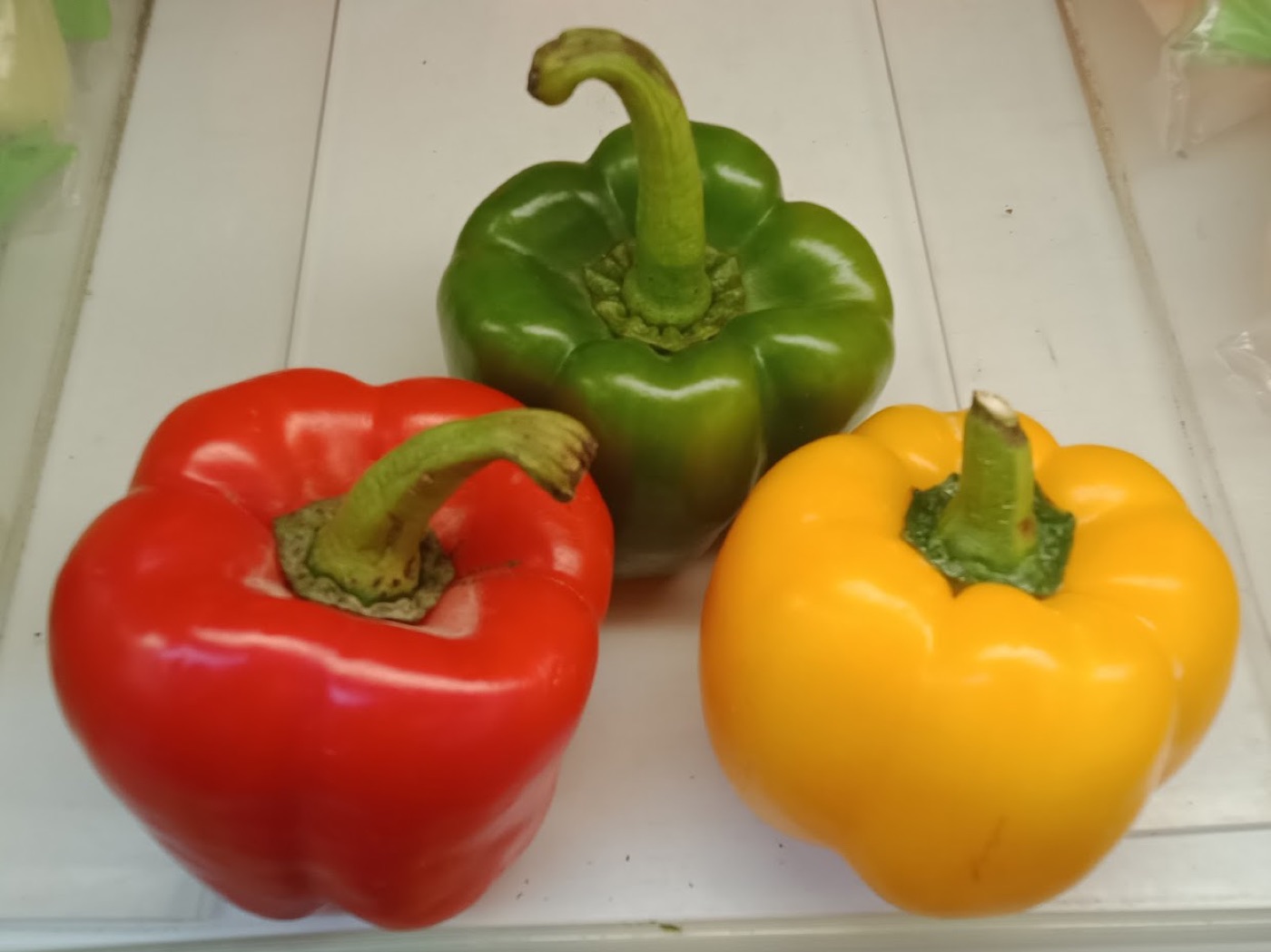
Peppers are the easiest of the three to save because the seed is already dry.
- Let the fruit ripen fully — past the colour you would eat it at, ideally turning red, orange or yellow.
- Cut it open and brush the seed out onto a plate. Discard any discoloured or shrivelled seed.
- Air-dry for a few days somewhere warm and dry, turning once a day, until the seed is brittle.
- Store in a labelled envelope or jar, cool and dark.
Because the seed starts dry, pepper seed stores well and is often the most reliable home-saved seed to keep.
Saving cucumber seed
Cucumber seed only matures in a fruit left well past eating stage — it will be large, yellow and soft. Bitter fruit at this stage is normal; do not eat it.
- Leave one or two fruits on the plant until they are fully yellow and beginning to soften.
- Scoop the seed and pulp into a jar of water and stir to separate the seed.
- Pour off the pulp and any floating seed, keeping the seed that sinks.
- Rinse and dry on a plate or coffee filter — not kitchen paper, which the seed sticks to.
Cucumber seed is relatively long-lived once dry; the viability table lists it among the crops that keep well.
Saving squash and courgette seed
Winter squash and courgette (zucchini) belong to the cucurbit family too, and their seed is saved the same way as cucumber: from a fully mature fruit.
- Use a fully ripe squash, not a small summer courgette — the seed needs the extra weeks to mature.
- Scoop, rinse and rub the seed to remove the fibrous strands.
- Spread thinly to dry and turn daily until completely crisp.
One caution unique to squash: different varieties in the same species cross-pollinate readily, so seed kept from a mixed plot may not come true. If that matters, grow one variety, or hand-pollinate and bag the flowers.
Drying and storing
Whatever the crop, the storage rules are the same: dry until it snaps, then keep it cool and dark. A seed that bends rather than breaks still holds moisture and will go mouldy in a jar. Label each packet with the crop, variety and year, and test anything older than a couple of seasons using the paper germination test before you rely on it.
Labelling and common mistakes
Once the seed is dry, cucumber and squash seed all look much alike, so label each packet straight away with the crop, variety and year. Three mistakes account for most failures with these crops:
- Saving from an unripe fruit. Cucumber and squash seed only matures in a fruit left well past eating stage.
- Storing before fully dry. A seed that bends rather than snaps still holds moisture and will mould.
- Saving from F1 hybrids. The seed grows, but the plants vary; save from open-pollinated varieties for predictability.
Get those three right and this group is among the easiest seed to save at home — often easier than tomatoes, because there is no fermenting step.
Frequently asked questions
Do I need to ferment pepper or cucumber seeds?
No. Fermenting is a tomato technique. Peppers come out dry; cucumbers and squash just need rinsing.
Can I save seed from a shop-bought pepper?
You can, and it often germinates, but if it was an F1 hybrid the plants will vary. See saving seed from supermarket produce.
Why did my squash seed come out empty?
Usually the fruit was picked before the seed matured. Leave the fruit to ripen fully before saving it.
Tools for this guide
Related guides
- How to Save Tomato Seeds (and Why Fermentation Helps)
- When to Harvest Seeds (and How to Tell They're Ready)
- How to Save Sunflower Seeds
Sources and research notes
Methods follow UK horticultural and seed-saving guidance. Always save from open-pollinated varieties if you want the same plant next year.
Written and edited by the Seedledge Editorial. Every guide answers one real growing question, is checked against the sources listed above, and is updated when guidance changes. We are an independent editorial desk, not horticultural professionals — read how we research and update our guides.