How to Propagate Pothos in Water
Pothos is one of the easiest plants to multiply. The whole trick is cutting below a node and changing the water. Here is the method, and how long it takes.
Quick answer
Cut below a node, stand it in water, change the water weekly
- The cut
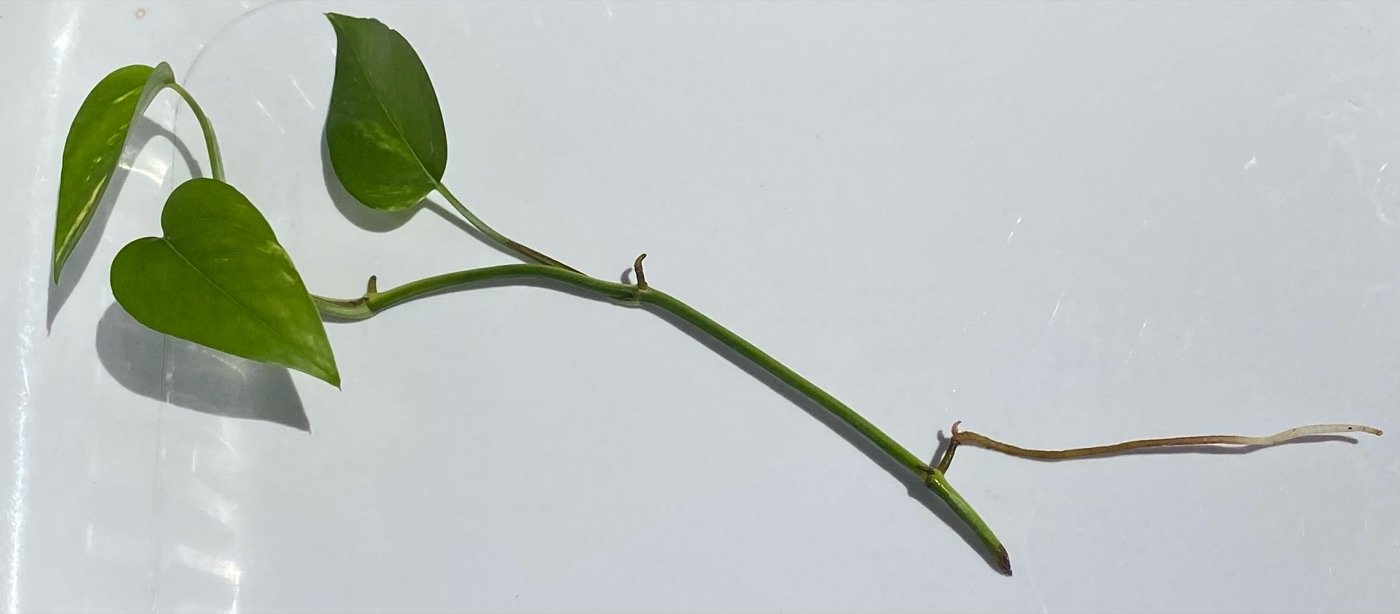
- Take a length with at least one node (the little bump where a leaf joins the stem).
- Strip leaves
- Remove any leaf that would sit below the waterline, or it will rot.
- Water
- Stand the node in a jar of water, in bright indirect light.
- Time
- Roots usually appear in about 2–4 weeks; pot up once they reach roughly 5 cm.
Why the node is everything
Roots on pothos do not grow from the middle of a stem — they grow from nodes, the small bumps along the vine where leaves and aerial roots form. A cutting with no node will sit in water, stay green for weeks and never root. So the single most important step is cutting a piece that includes at least one node.
More nodes, more roots
A cutting with two or three nodes often roots faster and makes a bushier plant than a single-node piece. It is the same effort for a better result.
Step by step
- Find a healthy vine with several leaves and clear nodes.
- Cut just below a node with clean scissors or snips — you want the node within the piece you keep.
- Remove the lower leaves so only the stem and node go in the water. Leaves left underwater rot and cloud the jar.
- Stand the cutting in a jar with the node submerged and at least one leaf above the water.
- Put it in bright, indirect light — a bright windowsill without harsh midday sun.
- Change the water every week (more often if it clouds) and rinse the stem.
- Wait. Roots typically show in about 2–4 weeks.
This is the same principle as other stem cuttings: a clean cut, a node, moisture and light. For tougher, woody plants see the general cutting pages listed below.
After roots appear
- Let roots reach about 5 cm before potting — long enough to cope with soil, short enough to avoid tangling.
- Pot into fresh, free-draining compost and water in.
- Keep it humid for the first week or two while it adjusts from water to soil.
- You can also leave it in water long term, but growth is slower and the plant eventually needs nutrients.
Pothos is one of the most forgiving cuttings, so it makes a good first practice before moving on to harder material like rosemary or lavender.
If nothing happens
- No node on the cutting — the most common reason. Take a new one with a node.
- Water left too long — it stagnates; change it weekly.
- Too little light — bright indirect light roots faster than a dark corner.
- Rotting stem end — trim back to firm, green tissue and start again with clean water and a clean jar.
Which pothos roots fastest
Within the pothos family the differences are small, but some do root more readily than others. Golden pothos and neon pothos are the forgiving ones; heavily variegated leaves with more white can be a little slower, because there is less chlorophyll to power new growth.
- Take cuttings in spring or summer, when the plant is growing actively — they root far faster than in midwinter.
- Warmth helps more than anything: a kitchen windowsill in summer beats a cool north-facing room.
- Avoid direct midday sun on the jar; it can stress the cutting and speed up algae in the water.
- Root several cuttings at once. Not all will take, and a fuller pot looks better from the start.
Other easy plants to root in water
Once pothos works, the same method applies to a range of other houseplants, which is a good way to build confidence before trying woody outdoor cuttings:
- Tradescantia and spider plants — root in days.
- Mint, basil and other soft herbs — fast, but use them fresh as they do not keep as houseplants.
- Philodendron and monstera — same node rule as pothos, slightly slower.
All follow the same three rules: a node, clean water changed weekly, and bright indirect light.
Water or soil? Which to choose
Both work, and the choice is mostly about what you want to watch.
| Method | Best for | Trade-off |
|---|---|---|
| Water | First-timers, watching progress, soft houseplants | Slower long-term; roots adapt to water, then to soil |
| Soil | A stronger start, less handling later | Cannot see roots; rot is harder to catch |
If you root in water and then pot up, expect a short adjustment while the plant moves from water roots to soil. Keep the compost barely moist for a week and give bright, indirect light.
Common problems, at a glance
- Leaves yellowing: usually too little light, or a leaf left below the waterline rotting.
- No roots after a month: check the cutting actually has a node — the single most common cause.
- Cloudy water: change it; stale water starves the cutting of oxygen.
- Mushy stem end: trim back to firm, green tissue with clean scissors and start again.
- Roots but no new leaves: normal at first — leaves follow once roots are established.
Frequently asked questions
How long does pothos take to root in water?
Usually about two to four weeks, faster in warm weather and slower in winter.
Can I root pothos directly in soil?
Yes. Keep the node in moist compost and cover it to hold humidity, but water rooting lets you watch progress and is more forgiving.
Do I need rooting hormone?
Not for pothos — it roots readily. Save hormone for slower, woodier cuttings.
Why is my cutting going yellow?
Usually too little light, or a leaf left underwater that has started to rot. Fix those two and take a fresh cutting if it does not recover.
Tools for this guide
Related guides
- How to Grow Plants from Leaf Cuttings
- How to Propagate Hydrangeas Three Ways
- How to Take Semi-Ripe Cuttings
Sources and research notes
Methods follow general stem-cutting principles from horticultural guidance; timings vary with warmth, light and the plant's condition.
Written and edited by the Seedledge Editorial. Every guide answers one real growing question, is checked against the sources listed above, and is updated when guidance changes. We are an independent editorial desk, not horticultural professionals — read how we research and update our guides.