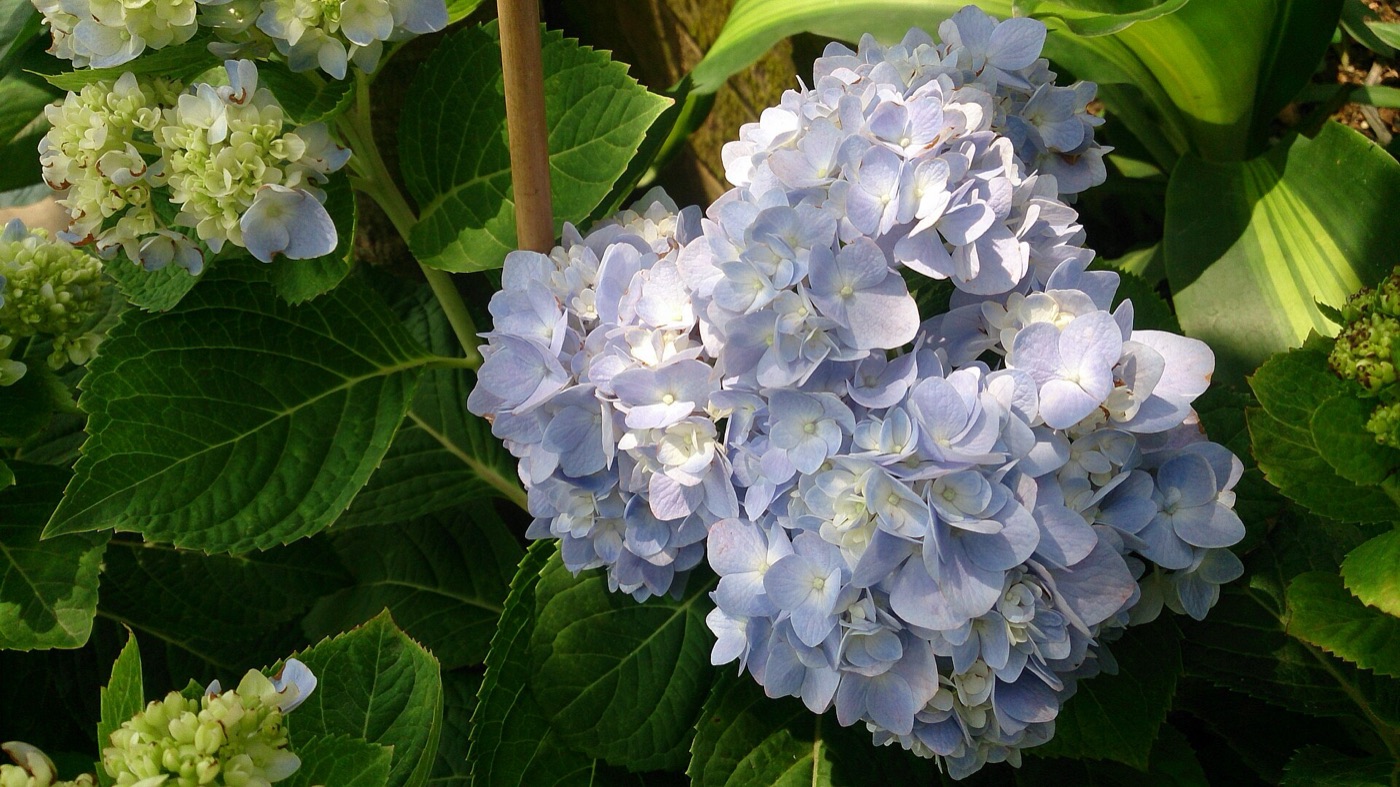
How to Propagate Hydrangeas Three Ways
Hydrangeas root readily from cuttings, and some kinds will even layer themselves where a branch touches the ground. Here are three methods and which to choose.
Hydrangeas are generous plants to propagate. The stems root easily, the plant throws plenty of suitable growth each year, and you can often get new plants several ways from the same shrub. The method you choose depends on the type and on how much time you have.
Three methods compared
| Method | Best time | Good for | Speed |
|---|---|---|---|
| Softwood cuttings | Late spring to early summer | New season's soft shoots | Weeks |
| Semi-ripe cuttings | Mid to late summer | Firmer, woodier stems | Slower, but robust |
| Layering | Spring to summer | Low, flexible branches | A season |
Softwood and semi-ripe cuttings use the same idea — cut a piece of stem and persuade it to root — and differ mainly in how mature the wood is. Layering avoids cutting altogether: you root a branch while it is still attached to the parent, which is by far the most forgiving method.
Softwood cuttings
Take these from this season's new growth in late spring or early summer, before the stems harden. Choose a healthy, non-flowering shoot, cut just below a leaf node, and trim it to about 10 cm. Remove the lower leaves, leaving a few at the top, and insert it in free-draining cutting compost. A slice off the end of each large leaf reduces water loss.
Keep the cuttings humid — a plastic bag or propagator lid helps — and out of direct sun. Most hydrangea softwood cuttings root within a few weeks. For the full method, see our guide to taking softwood cuttings.
Semi-ripe cuttings
By mid to late summer the new growth has begun to firm up. Cuttings taken now are slower to root but stand up to winter better, so they suit anyone who wants sturdy young plants to overwinter. Take them the same way as softwood cuttings, but choose stems that are firm at the base and still green at the tip. Our guide to semi-ripe cuttings covers the detail.
Layering
If your hydrangea has low branches that will bend to the ground, layering is the easiest route of all. Pick a flexible stem, wound the underside slightly, and bury a section a few centimetres deep, pinning it down with a bent wire. Leave the growing tip above ground. Over a season the buried point roots, and you can then cut the new plant free from the parent. Unlike a cutting, a layered stem never dries out, so it almost always succeeds. See rooting a branch while it is on the plant for the principle.
Aftercare
However you root them, young hydrangeas need gentle treatment at first. Pot them into ordinary compost once rooted, keep them watered, and shelter them from strong sun and wind while they establish. Hardiness varies — mophead and lacecap types are less cold-tolerant than some species — so protect young plants through their first winter, especially in cold gardens.
One last point: if you are taking cuttings from a named variety, the new plants will be identical to the parent. Hydrangeas grown from seed are a lottery, which is exactly why cuttings are the way to build more of a plant you already like.
If it does not work
- Cuttings wilt within a day. They have dried out. Humidity was too low — a cover or a mist of water keeps the leaves from losing moisture faster than the stem can replace it.
- Leaves turn black and slimy. Too wet, or the cover was left sealed and airless. Vent the cover daily and let the compost drain.
- No roots after several weeks. The wood may have been too mature, or the cutting was taken from a flowering stem. Next time use soft, non-flowering growth.
- Roots form, then the plant collapses. Usually the young plant dried out or was scorched after potting on. Acclimatise it gently to open air before moving it out.
The single biggest factor is keeping the unrooted leaves turgid. Everything else is secondary to humidity in those first few weeks.
Tools for this guide
Related guides
- How to Propagate Rosemary and Lavender
- How to Grow Plants from Leaf Cuttings
- How to Take Softwood Cuttings
Sources and research notes
Method follows UK horticultural guidance on hydrangea propagation. Rooting time and hardiness vary with species and climate.
Written and edited by the Seedledge Editorial. Every guide answers one real growing question, is checked against the sources listed above, and is updated when guidance changes. We are an independent editorial desk, not horticultural professionals — read how we research and update our guides.