When and How to Divide Daffodil Clumps
A daffodil clump that stops flowering is usually just overcrowded. Lifting and splitting it restores the display and gives you armfuls of bulbs for new drifts.
Daffodils multiply underground, and after a few years a clump becomes so crowded that the bulbs compete for space and nutrients. The tell-tale sign is a drift that produces plenty of leaves but fewer and smaller flowers, or a bald patch in the middle where the bulbs have jammed together. Splitting the clump solves it and leaves you with far more bulbs than you started with.
When to divide
The best time is after the leaves have died back but while you can still see where the bulbs are — usually early summer, about six weeks after flowering. At this point the bulbs are dormant and the roots have done their work. You can divide them then and replant immediately, or store the dried bulbs and replant in autumn.
Avoid lifting daffodils while they are still in leaf and growing. The leaves are feeding next year's flower, and disturbing them then costs you the display.
Step by step
- Wait for yellow leaves. When the foliage has gone yellow and flopped, the bulbs are ready.
- Fork up the clump. Use a fork (not a spade) inserted well away from the bulbs, and lever the whole clump out. Daffodil bulbs go deep, so dig generously.
- Separate the bulbs. Ease them apart by hand. They usually come away easily once lifted; discard any soft, damaged or mouldy bulbs.
- Replant or store. Either replant straight away at the same depth, or dry the bulbs somewhere airy and store them until autumn planting time.
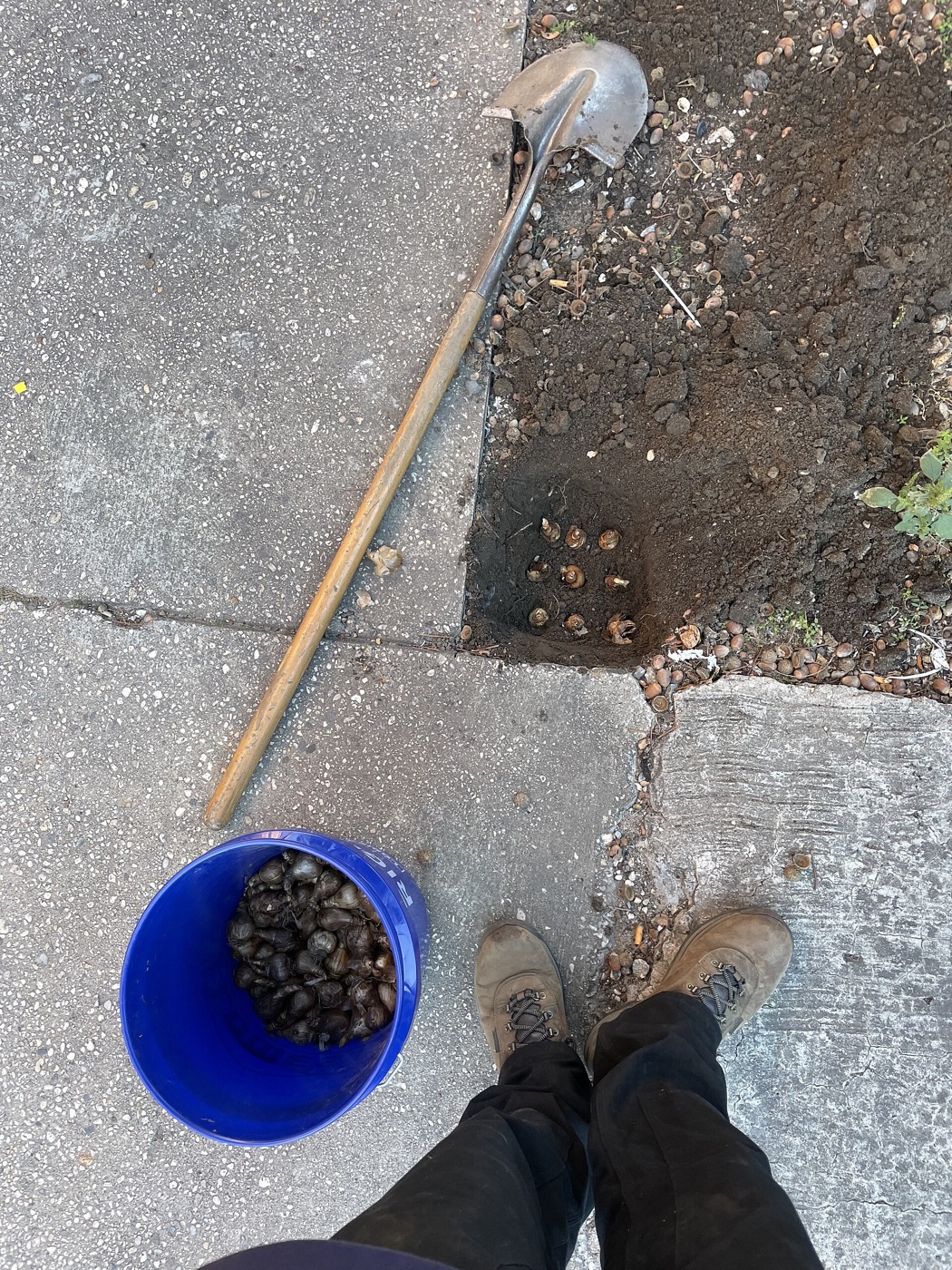
- Space them out. Replant about 10–15 cm apart and 10–15 cm deep so the clump has room to grow back into a good display.
Planting depth
Set bulbs at roughly two to three times their own height, which for most daffodils is about 10–15 cm. Pointed end up; if unsure, plant on their side and the shoot will find its way. A handful of grit beneath each bulb helps if your soil is heavy or wet, which is the main cause of bulb rot.
Storing until autumn
If you lift in early summer but want to replant later, dry the bulbs in a single layer somewhere cool, airy and out of direct sun for a week or two. Then keep them in a breathable tray or paper bag in a cool, dry, frost-free place. Check occasionally and remove anything that has gone soft. Plant them out by mid-autumn so they have time to root before winter.
Turning one clump into a drift
Dividing is the cheapest way to naturalise daffodils through grass or under trees. Rather than planting neat rows, scatter the separated bulbs and plant each where it lands — the result looks natural rather than regimented. Remember not to mow the leaves until they have died down completely, or you rob the bulbs of next year's energy.
Why have my daffodils stopped flowering?
Usually overcrowding, or leaves cut back too early in previous years. Divide the clump and leave the foliage to die back naturally each season.
Can I divide daffodils in autumn?
Yes — lift and replant them in one go in early autumn, before the soil cools too much. Bulbs lifted in summer and stored also replant well in autumn.
Tools for this guide
Related guides
- How to Divide Bearded Iris (and Get More Flowers)
- How to Divide Ornamental Grasses
- How to Divide Hostas and Daylilies
Aftercare
Whether you replant immediately or in autumn, water the new bulbs in and keep the soil from drying out completely while they settle. From the following spring, treat the clumps as normal daffodils: let the leaves photosynthesise fully and only cut them back once they have yellowed. A mulch of compost in spring helps, and avoids the need for much else.
Avoid lifting the same clump again for several years. Left undisturbed, daffodils multiply naturally, and a drift that was divided once can be left to build back into a dense, generous display.
Sources and research notes
Timing and depth follow UK horticultural guidance for daffodils and other spring bulbs. Exact dates vary with local climate.
Written and edited by the Seedledge Editorial. Every guide answers one real growing question, is checked against the sources listed above, and is updated when guidance changes. We are an independent editorial desk, not horticultural professionals — read how we research and update our guides.