When to Plant Daffodil Bulbs (and Why Timing Matters)
Daffodils planted at the wrong time either rot before they root or flower late and small. The window is wider than you might think, but it does have an edge.
Daffodil bulbs look dormant in their packet, but they are not asleep in a way that lets you plant them whenever you like. They need a run of cool, moist weeks to grow roots before winter, and that run has to happen before the ground gets too cold. Plant too early and the bulbs sit in warm soil where they can rot or start into growth prematurely; plant too late and they never root properly, so spring flowers come up small or not at all.
The planting window, by situation
| Situation | When to plant |
|---|---|
| Mild, coastal or sheltered gardens | Late October to early December. |
| Average inland gardens | September to November. |
| Cold or exposed gardens | September to mid-October, so roots form before hard frost. |
| Bulbs bought late at a discount | Still plant them if the ground is workable; late is better than never. |
As a rule of thumb, aim to have bulbs in the ground about six weeks before the soil is likely to freeze. That gives the roots time to establish without the shoots being tempted up too soon.
Why autumn, not spring
Spring-planted daffodil bulbs rarely do well. The bulb needs the cold of winter to break its dormancy and trigger flowering, and it needs the moist weeks of autumn to build a root system. A bulb dropped into spring soil has missed both, so it either produces blind leaves with no flower or simply shrivels.
Depth and spacing
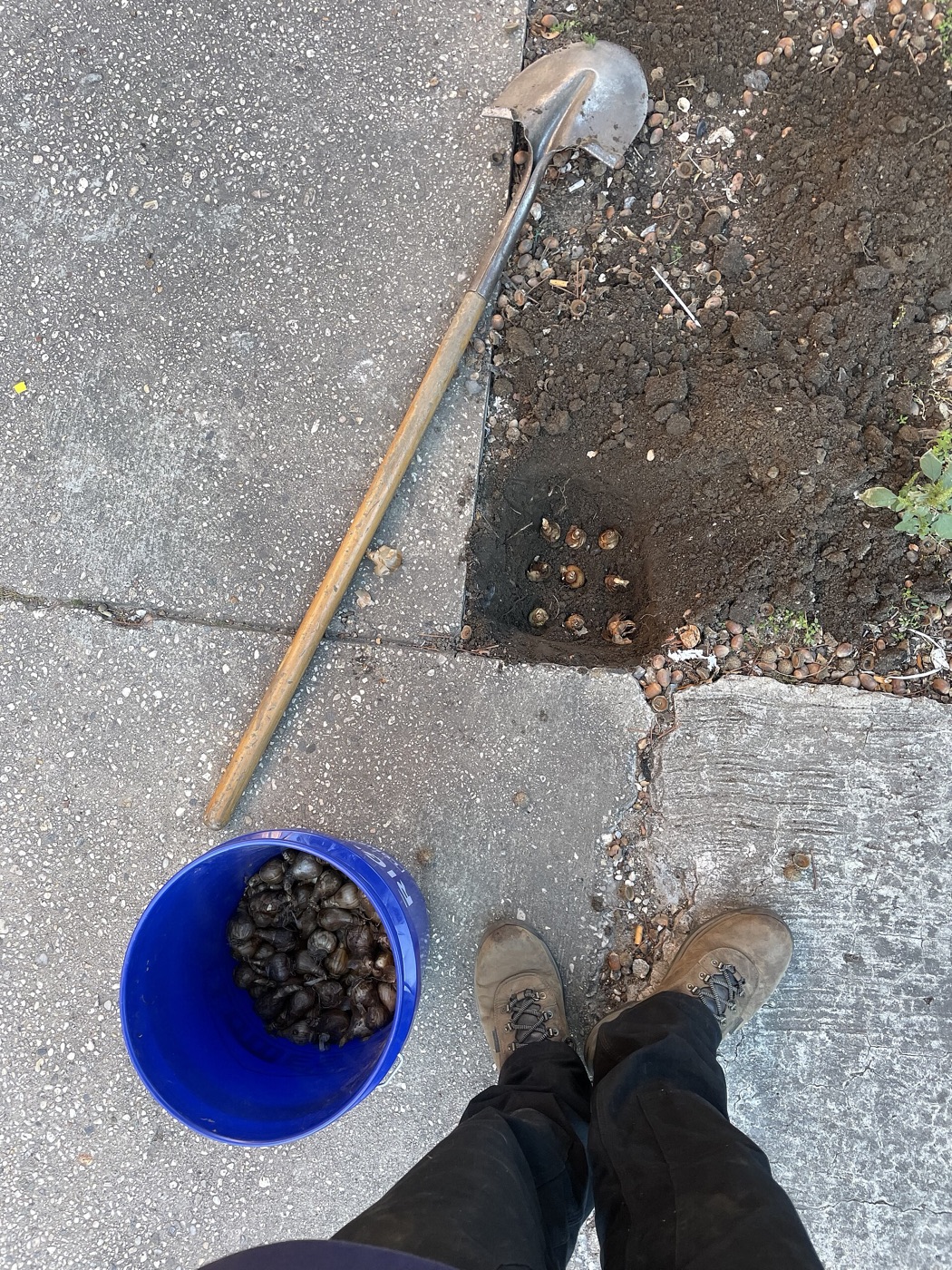
Plant each bulb so the top sits roughly two to three times its own height below the surface — for most daffodils that is about 10–15 cm. Space them about 10 cm apart for a bold drift, or closer in pots. Set them pointed end up. If you are unsure which end is up, plant them on their side; the shoot will find its way.
In heavy soil, add a handful of grit or sharp sand beneath the bulb to improve drainage. Daffodils dislike sitting in water, which is the main cause of rot.
If you missed the window
Do not throw the bulbs away. If the ground is still workable, plant them — they will usually flower a little later and a little smaller for the first year, then settle in. If the ground is frozen, pot the bulbs into compost and keep the pots somewhere cool and frost-free until you can plant them out in early spring, accepting that they may not flower until the following year.
Naturalising in grass
If you want daffodils to spread through a lawn or under trees, plant them in informal drifts rather than neat rows. Scatter a handful and plant each bulb where it lands, which gives a natural look and avoids the tell-tale line. Choose smaller, vigorous varieties for grass, as tall, heavy-headed types flop when they are crowded by turf.
The one rule for grass plantings is not to mow until the leaves have died back completely — usually about six weeks after flowering. Cut earlier and you rob the bulb of the energy it needs for next year, and the display fades over time.
Forcing bulbs indoors
If you want flowers indoors in winter, choose prepared bulbs sold for forcing and pot them in early autumn. Keep the pots cool and dark for several weeks to let roots form, then bring them into light and warmth to flower. This is a different schedule from garden planting, so do not mix the two.
Can I plant daffodil bulbs in spring?
You can, but results are poor. Planted in autumn the bulb has time to root and chill; in spring it usually flowers weakly or not at all the first year.
Should I soak bulbs before planting?
No. Soaking can encourage rot. Plant them dry into moist soil and let the soil do the work.
Tools for this guide
Related guides
- Can You Grow Your Own Saffron? An Honest Guide
- How to Store Dahlia Tubers Over Winter
- How to Store Gladiolus Corms Over Winter
Sources and research notes
Timing and depth follow UK horticultural guidance for spring bulbs. Exact dates vary with local climate and soil.
Written and edited by the Seedledge Editorial. Every guide answers one real growing question, is checked against the sources listed above, and is updated when guidance changes. We are an independent editorial desk, not horticultural professionals — read how we research and update our guides.